

 See My Latest Article on HelloNation
Kitchen flooring has to handle more than everyday foot traffic. It may be exposed to spilled water, dropped dishes, cooking grease, muddy shoes, pet activity, and repeated cleaning. For households in Rochester, NY, seasonal moisture and winter residue add another concern: flooring should tolerate wet entryways, tracked-in salt, and changes in indoor humidity without becoming difficult to maintain.
The best choice depends on how a kitchen is used, the condition of the subfloor, maintenance preferences, and the home’s layout. No single material is ideal for every household, but several options consistently perform well.
What makes a kitchen floor a good choice?
The most suitable kitchen flooring is water-resistant, comfortable enough for standing, easy to clean, and stable under changing conditions. It should also provide enough traction to reduce slipping when the surface is damp.
Important factors include:
- Moisture tolerance: Kitchens experience occasional spills, appliance leaks, and wet cleaning.
- Durability: The floor should withstand dropped cookware, furniture movement, and frequent walking.
- Maintenance: Textured or deeply grooved surfaces can collect crumbs and grease.
- Comfort: A very hard surface may become tiring for people who cook often.
- Repairability: Some materials allow individual planks or tiles to be replaced if damage occurs.
- Subfloor condition: Uneven, damp, or damaged subfloors can affect the performance of almost any flooring material.
A floor that looks attractive but cannot tolerate the household’s routines may require more upkeep than expected.
Is luxury vinyl flooring a practical kitchen option?
Yes. Luxury vinyl plank and tile are popular kitchen choices because they offer good moisture resistance, moderate comfort, and relatively simple maintenance. Quality products can imitate wood, stone, or ceramic tile while providing a surface that is less rigid underfoot.
Luxury vinyl is especially practical in kitchens connected to entry areas, dining spaces, or family rooms because it can create a continuous visual surface. It also avoids some of the concerns associated with natural wood, such as surface swelling from standing water.
However, “waterproof” usually refers to the flooring product itself, not the entire floor system. Water can still reach the subfloor through open seams, damaged edges, gaps around cabinets, or a leak that remains unnoticed. Careful installation and prompt cleanup still matter.
Luxury vinyl may not be the best choice if the subfloor is uneven. Small irregularities can show through thinner products, create movement, or contribute to seam problems over time.
Are porcelain and ceramic tile good for kitchens?
Tile is one of the most moisture-tolerant kitchen flooring options. Porcelain tile is dense and highly resistant to water absorption, while ceramic tile provides a broad range of colors, patterns, and sizes. Both are well suited to kitchens where spills and frequent cleaning are common.
Tile also handles grit and tracked-in winter residue well when properly cleaned. That can be useful in homes where people enter the kitchen from a garage, porch, mudroom, or exterior walkway.
The drawbacks are comfort and installation complexity. Tile is hard underfoot, and dropped glass or dishes are more likely to break. Grout lines can also collect soil, especially if the grout is light-colored or has a rough texture.
Large tiles may reduce the number of grout joints, but they require a sufficiently flat subfloor. Any movement or flexing beneath the tile can lead to cracked grout or loose tiles. In older homes, the floor assembly may need evaluation before tile is selected.
Can hardwood flooring work in a kitchen?
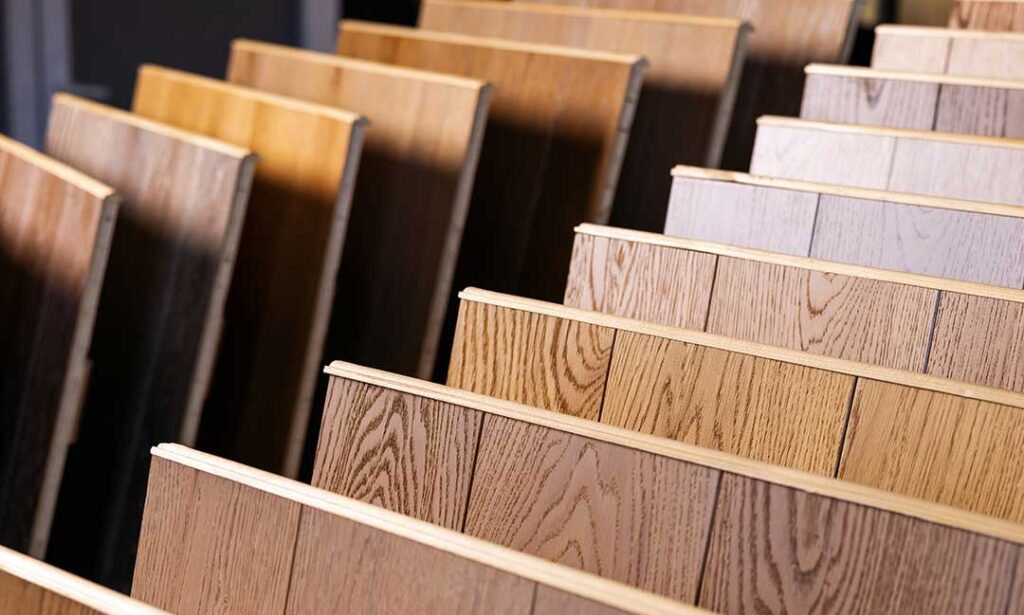
Hardwood can work well in a kitchen if spills are cleaned promptly and the room does not regularly experience standing moisture. Its main advantage is visual continuity: the same flooring can often extend through connected living and dining areas, making the space feel more cohesive.
Hardwood also has a warmer, more comfortable feel than tile. Minor surface wear may blend into the natural character of the material, and many hardwood floors can be refinished after years of use.
The main concern is water exposure. A leaking dishwasher, refrigerator supply line, or sink cabinet can cause swelling, staining, or cupping if moisture is not discovered quickly. Surface finish helps protect the wood, but it does not make hardwood immune to water damage.
Hardwood is more reasonable for kitchens with good ventilation, reliable appliances, and household habits that include wiping up spills rather than leaving them on the floor.
What about engineered wood?
Engineered wood can be a useful alternative when the appearance and feel of wood are desired but greater dimensional stability is preferred. It consists of a real wood surface over layered wood-based construction, which can make it less prone to movement from normal changes in indoor humidity than some solid wood floors.
That does not mean engineered wood is waterproof. The surface may tolerate ordinary kitchen use, but repeated wetting, leaks, or moisture trapped at the seams can still cause damage. Product construction varies, so the wear layer, finish, edge treatment, and installation requirements should be reviewed carefully.
This option may suit kitchens that connect directly to living areas, especially where a continuous wood appearance is a priority.
Is laminate flooring suitable for a kitchen?
Modern laminate can be attractive, durable, and resistant to everyday scratching. Some products are designed with improved moisture protection, making them more practical in kitchens than older laminate floors.
Still, laminate deserves careful consideration in areas exposed to frequent wetness. Water that reaches the core through seams or damaged edges can cause swelling that is difficult to reverse. It may be less forgiving than tile or well-sealed resilient flooring if a plumbing leak occurs.
Laminate can work in a kitchen with prompt spill cleanup and appropriate installation, but the product’s moisture rating and warranty conditions should be understood before choosing it.
Which flooring is easiest to maintain?
Resilient flooring and well-installed tile are generally among the easiest kitchen surfaces to maintain. Regular sweeping or vacuuming removes abrasive grit, while damp mopping handles ordinary spills and food residue.
Maintenance also depends on surface texture. Highly embossed wood-look flooring may hide dust visually but can require more effort to clean. Tile is durable, yet grout often needs more attention than the tile surface itself.
A simple maintenance routine usually includes:
- Removing grit before it is ground into the surface.
- Wiping water and oily spills soon after they occur.
- Using cleaning products approved for the specific flooring.
- Placing absorbent mats near exterior doors, while keeping the mats dry and clean.
- Checking under sinks and around dishwashers for early signs of leaks.
During Rochester winters, salt and fine grit tracked indoors can act like sandpaper. Frequent removal is more helpful than relying on stronger cleaning chemicals.
What flooring is safest for a busy household?
Safety depends on traction, surface condition, lighting, and moisture control rather than material alone. A polished surface may become slippery when wet, while an extremely textured surface can make cleaning difficult.
For households with children, older adults, or pets, consider flooring with moderate slip resistance and a finish that does not become slick when damp. Rugs or mats should have secure backing and should not curl at the edges. Uneven transitions between the kitchen and adjoining rooms can also create tripping hazards.
Very hard flooring can increase breakage when dishes fall, while softer flooring may show dents more easily. The right balance depends on which risks are most common in the home.
How should homeowners choose among the options?
Start with the conditions of the room rather than choosing solely by appearance. A kitchen near an exterior entrance may benefit from highly moisture-tolerant flooring. A kitchen that opens into a living area may favor a continuous wood or wood-look surface. A household that cooks frequently may place greater value on underfoot comfort.
The condition of the subfloor should be considered before materials are purchased. Moisture, unevenness, movement, and inadequate transitions can affect the finished floor regardless of the product selected.
For many households, the practical shortlist is:
- Luxury vinyl: Comfortable, moisture-resistant, and versatile.
- Porcelain or ceramic tile: Highly durable and moisture-tolerant, but hard underfoot.
- Hardwood: Warm and attractive, but requires quick response to spills and leaks.
- Engineered wood: A wood appearance with useful dimensional stability, though not waterproof.
- Moisture-resistant laminate: Durable and economical in suitable conditions, but vulnerable if water reaches the core.
The best kitchen floor is the one that matches the room’s moisture exposure, traffic, cleaning habits, comfort needs, and subfloor—not simply the material with the most appealing sample.