

 See My Latest Article on HelloNation
Eco-friendly flooring is not defined by one material or a single certification. A responsible choice depends on the flooring’s raw materials, manufacturing process, expected lifespan, maintenance needs, indoor-air impacts, and disposal options.
For households in Rochester, NY, moisture, winter salt, tracked-in grit, basement conditions, and older housing stock also matter. A flooring material that appears sustainable in a product description may perform poorly if it cannot handle the room where it is installed.
What makes flooring environmentally responsible?
Eco-friendly flooring generally has a lower environmental impact across its life cycle. That includes how raw materials are obtained, how much energy is used in manufacturing, how long the product lasts, and what happens when it is removed.
Useful questions include:
- Is the material made from rapidly renewable, recycled, reclaimed, or responsibly harvested resources?
- Does the manufacturing process use substantial energy, water, adhesives, or chemical treatments?
- Can the flooring last for several decades with reasonable care?
- Can individual boards or tiles be repaired instead of replacing the entire floor?
- Does it release low levels of volatile organic compounds, commonly called VOCs?
- Can it be reused, recycled, composted, or otherwise diverted from disposal?
No flooring material performs perfectly in every category. A durable floor that lasts 50 years may have a lower overall impact than a product made from recycled content that needs replacement every 10 years.
Is hardwood flooring an eco-friendly choice?
Hardwood can be a responsible choice when it comes from well-managed forests, is durable enough to be refinished, and is installed to suit the room’s moisture conditions. Solid wood flooring may be sanded and refinished multiple times, extending its useful life.
The source of the wood matters. Look for clear information about responsible forestry practices rather than relying only on general claims such as “natural” or “green.” Reclaimed wood can also reduce demand for newly harvested timber, although its condition, previous finishes, and suitability for indoor use should be evaluated carefully.
Hardwood is usually more appropriate for dry living areas than for rooms with frequent moisture. Rochester’s wet seasons, snow-covered footwear, and occasional basement dampness make moisture control essential. Standing water, repeated wet cleaning, and high humidity can cause boards to expand, cup, or separate.
Engineered wood may use wood fibers more efficiently than solid boards and can be a practical option where dimensional stability is helpful. Its environmental profile depends on the core materials, adhesives, finish, and whether the wear layer can be refinished.
Is bamboo more sustainable than wood?
Bamboo grows quickly and can produce usable material without the decades required for many tree species. That makes it appealing from a renewable-resource perspective. However, bamboo flooring is not automatically sustainable.
Environmental considerations include transportation distance, the adhesives used to bind strands or strips, factory energy use, and the durability of the finished product. Some bamboo floors are highly durable, while others can dent, scratch, or show finish wear more quickly than expected.
Bamboo should be judged by its construction and performance rather than by the plant’s rapid growth alone. Product information should explain the finish, emissions testing, warranty limitations, and appropriate room conditions.
What should residents know about cork flooring?
Cork is harvested from the outer bark of cork oak trees without cutting down the trees. The bark can regrow, which makes cork a renewable material when forests are managed responsibly.
Cork flooring is resilient, quiet, and warmer underfoot than many hard surfaces. Its cushioning can be useful in kitchens, home offices, and rooms where people stand for long periods. It may also help reduce sound transmission.
Cork requires careful protection from moisture and direct sunlight. Spills should be cleaned promptly, and the finish may need periodic renewal depending on wear. It is generally better suited to above-grade rooms with stable humidity than to damp areas.
Are linoleum and vinyl the same thing?
No. True linoleum is made primarily from materials such as linseed oil, wood flour, cork dust, and mineral fillers. It is different from vinyl flooring, which is made from synthetic plastic compounds.
Linoleum can be durable and may be repairable or recyclable in some circumstances. It is often available in sheet or tile form, which can reduce seams and simplify cleaning. However, its environmental performance still depends on the backing, adhesives, finish, manufacturing, and disposal pathway.
Vinyl flooring may contain recycled content and can perform well in wet areas, but it is not automatically eco-friendly. Manufacturing, plastic composition, chemical additives, and limited recycling options should be considered. A product marketed as “green” should be evaluated through its technical documentation rather than its appearance or advertising language.
What about recycled carpet?
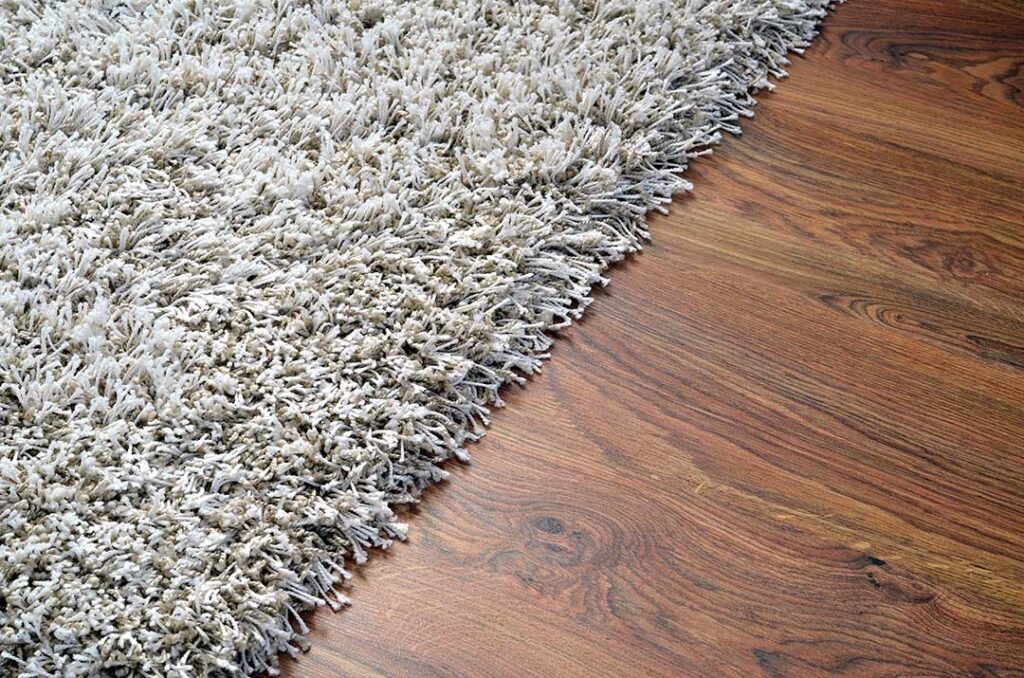
Carpet made with recycled fibers or backing can reduce demand for new raw materials. It may also provide comfort, warmth, and sound absorption in bedrooms and finished living areas.
The main concerns are durability, cleaning, moisture, and end-of-life handling. Carpet can trap dust and allergens if it is not maintained properly, and damp carpet can develop odors or microbial growth. In a home with basement humidity, entryway salt, or frequent outdoor traffic, a shorter service life may offset the benefit of recycled content.
For a lower-impact carpet installation:
- Choose a product sized for the room and expected traffic.
- Prefer low-emission backing and adhesives.
- Use removable mats in entrances and transition areas.
- Avoid installing carpet where recurring moisture is likely.
- Ask whether the material has a realistic take-back or recycling pathway.
Which flooring materials are useful for low-VOC interiors?
Low-VOC flooring can help limit odors and chemical emissions after installation, especially in rooms with limited ventilation. Hard surfaces such as ceramic tile, properly finished wood, cork, and some resilient products may have relatively low emissions, but the flooring itself is only part of the installation.
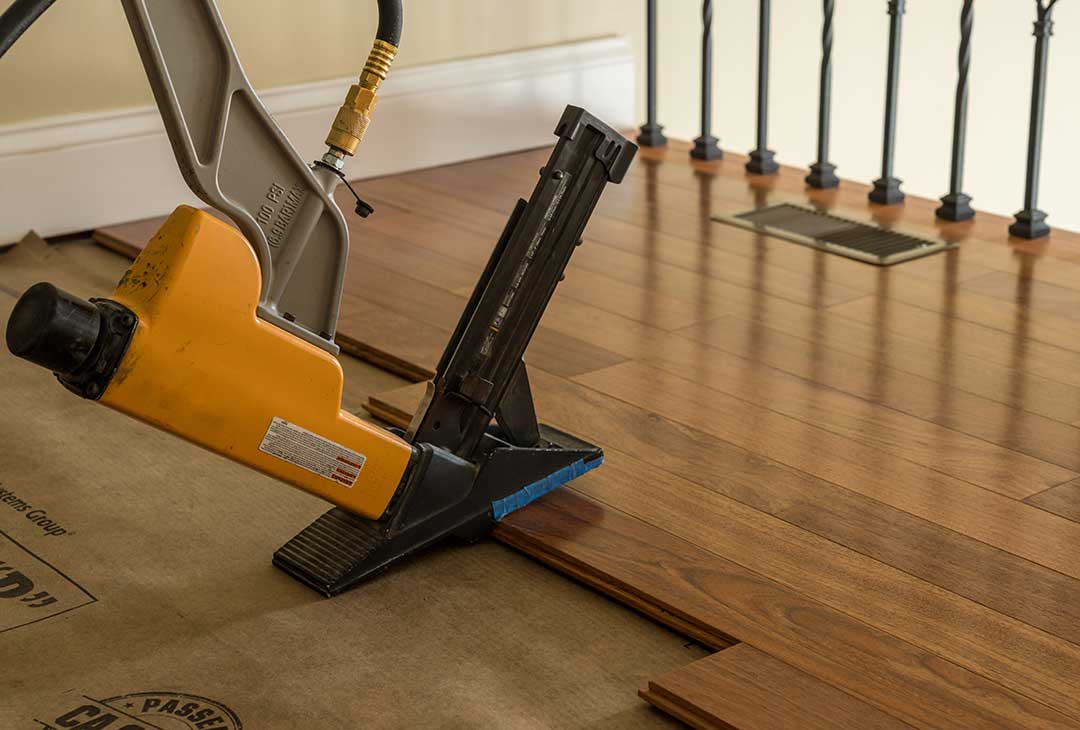
Adhesives, underlayment, sealers, coatings, and cleaning products can also affect indoor air quality. A flooring material with low emissions may be paired with an adhesive that has a stronger odor or higher emissions.
Look for specific emissions-testing information instead of vague claims such as “non-toxic.” During installation, ventilation and adherence to product curing instructions are important. People with asthma, chemical sensitivities, or respiratory conditions may need additional planning.
Does local climate affect sustainable flooring decisions?
Yes. Flooring that lasts longer is often more sustainable, and local conditions strongly influence service life. Rochester experiences cold winters, snow, rain, freeze-thaw cycles, and seasonal changes in indoor humidity. Those conditions can bring moisture, salt, sand, and grit into a home.
Practical strategies include:
- Place durable, cleanable surfaces near exterior doors.
- Use entry mats that can hold moisture and grit.
- Wipe up melted snow instead of allowing it to sit on wood or cork.
- Keep indoor humidity reasonably stable during heating season.
- Inspect basement areas for dampness before installing moisture-sensitive flooring.
- Select flooring transitions that reduce water exposure between rooms.
Older homes may also have uneven subfloors, previous layers of flooring, or unknown adhesives. Removing old flooring can disturb materials that require special handling, particularly if the age and composition are uncertain. Testing and proper precautions may be necessary before demolition.
How can a homeowner compare flooring products fairly?
A useful comparison looks beyond price and recycled-content percentages. Review the product’s expected service life, repairability, installation materials, maintenance requirements, moisture limits, and disposal options.
A simple evaluation can ask:
1. How long is the floor likely to last in this particular room?
2. Can damaged sections be repaired?
3. Does installation require substantial adhesive or underlayment?
4. Are emissions and material contents clearly disclosed?
5. Will routine cleaning require harsh chemicals?
6. What happens when the floor is eventually removed?
The most environmentally responsible flooring is often the material that fits the room, remains serviceable for many years, and avoids premature replacement. Choosing a modest, durable floor and maintaining it carefully can have a greater environmental benefit than selecting a heavily promoted product that fails under local conditions.